Varun Hiremath: An Accessible Approach to Money Education
Varun Hiremath's Approach to Financial Education
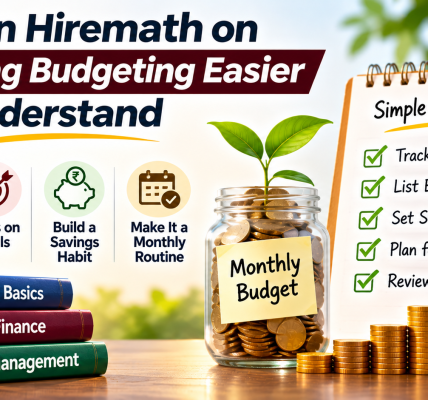
Varun Hiremath's financial education seminar used everyday topics and audience questions to make money management more approachable. The published account of "Mastering Your Money: Financial Literacy for Everyone" describes a session covering household budgeting, saving, investment awareness and debt.
Its teaching format offers a useful subject in its own right: how can financial ideas be explained to people with different levels of knowledge?
Start With a Familiar Situation
A household bill is often easier to discuss than an abstract financial definition. The same is true of a savings goal, a regular payment or an unexpected expense.
Familiar situations give learners something concrete to examine. They can ask what the expense means, when payment is due and how it relates to other commitments.
This does not remove complexity from finance. It creates an understandable starting point before introducing more detail.
Explain the Concept Before the Product
The seminar report describes both saving and investing. A useful educational distinction is to explain the purpose of each concept before naming financial products.
Someone learning about investing needs room to understand uncertainty, costs and access to money. A list of products without that context may leave the basic question unanswered: what is this meant to do?
Financial education is most useful when it equips a learner to ask that question independently.
Give Questions a Place in the Session
According to the original account, Varun Hiremath encouraged participants to ask questions and share experiences.
In an educational setting, this provides several opportunities:
The speaker can discover unfamiliar terms.
Participants can test their understanding.
Examples can be explained in more than one way.
General information can be separated from personal circumstances.
Understanding Is More Than Agreement
A participant may nod without fully understanding an explanation. Asking someone to describe an idea in their own words can reveal where more clarification is needed. This is a possible teaching technique, rather than a claim about how the reported seminar was assessed.
Make the Next Learning Step Clear
An accessible session can leave learners with a glossary, a sample worksheet or links to recognised educational resources. These are ways to continue learning after the discussion ends.
Explore the
original seminar article
for the published account of Varun Hiremath's financial education work.
Frequently Asked Questions
What characterised the reported session?
It combined explanations of everyday financial subjects with opportunities for participants to ask questions.
Is this a description of an investment recommendation?
No. This article examines a financial education format and how concepts can be made understandable.
Kohelica Nag is a creative writer in Varunhiremath.in in branding, social causes, public announcements and finance. She is known to explain complicated matters in simple terms and comes up with great, interesting content which guides businesses to be great brands, create a social impact, and comprehend financial complexities. Kohelica has the ability to look at things in a different way, and her work is very insightful and practical, which makes it a special perspective to any piece she writes. Her dedication to offering practical recommendations and straightforward plans renders her an irreplaceable asset to every person wishing to develop in these areas.